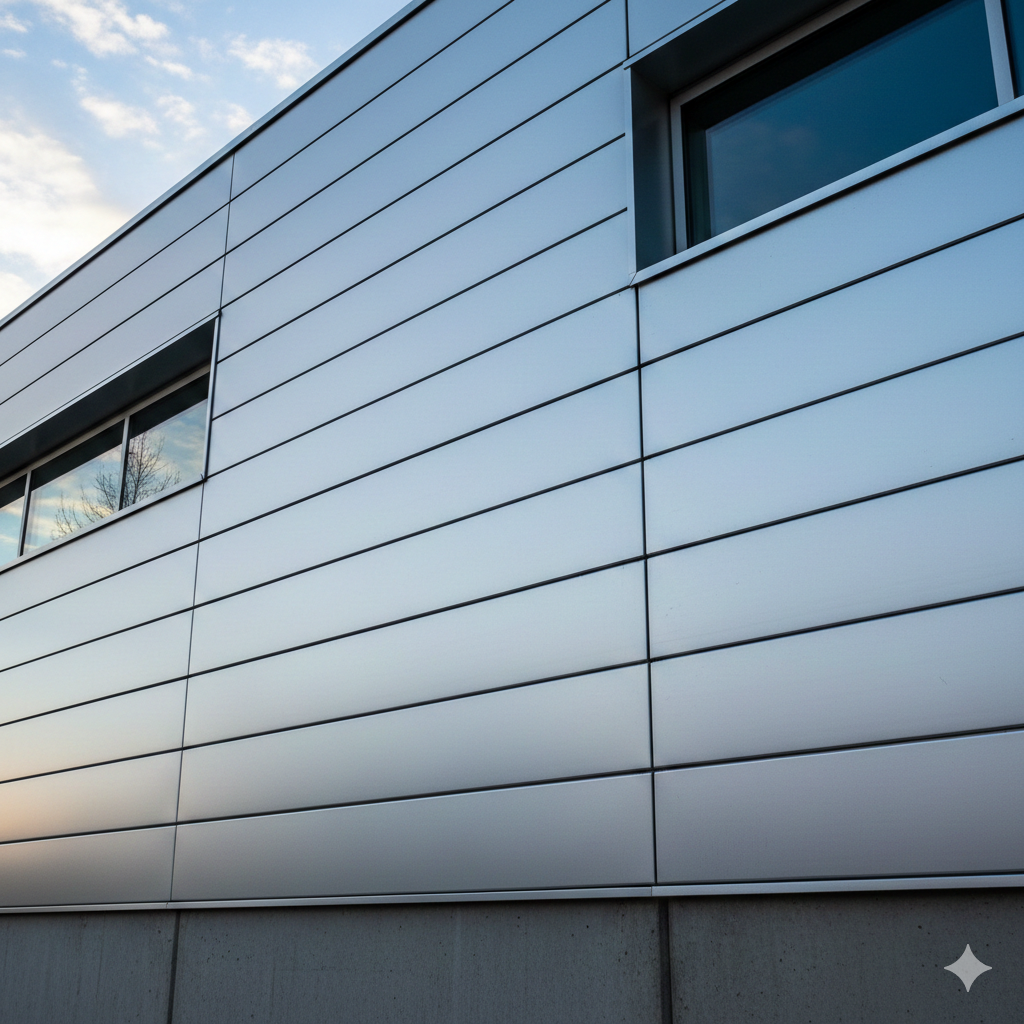
Aluminum cladding facade gives your building a low‑maintenance, weather‑resistant skin that also opens up broad design freedom. You get durable protection, improved energy performance, and a sleek, customizable exterior in one lightweight system.
As you explore applications, expect options that suit commercial, institutional, and residential projects—rainscreen assemblies, ventilated facades, and composite panels each solve different performance needs. The next sections will walk through practical design and performance considerations so you can match material, attachment, and finish to your project goals.
Aluminum Cladding Facade Applications
Aluminum cladding suits projects that need low weight, corrosion resistance, and precise visual control. You can use it where thermal performance, fire ratings, or quick installation timelines matter most.
Commercial Building Integration
You can specify aluminum cladding for office towers, retail centers, and mixed-use façades where appearance and maintenance costs drive decisions. Choose aluminum composite panels (ACP) or solid aluminum rainscreen modules to achieve flat, continuous faces or three-dimensional patterns; both allow factory-applied PVDF or polyester finishes for long-term color retention.
Installations often incorporate insulated cavity systems to meet energy codes and provide access for MEP services. You should confirm fire performance (A2-s1,d0 or equivalent) and test reports for your selected system, especially on high-rise projects.
Use custom perforation, anodizing, or through-color coatings to blend branding with solar shading. Fabrication tolerances let you integrate curtainwall, louvers, and signage with tight joints for a premium look.
Residential Usage
You can apply aluminum cladding on multi-family buildings, townhouses, and high-end single-family homes where lightweight panels reduce structural demands. Choose narrow-profile rainscreen panels or interlocking systems for clean lines and simplified flashings that speed installation.
For thermal comfort, combine externally vented cavities with mineral wool or rigid foam to meet U-values and limit thermal bridging. You should consider finish options—anodized, PVDF, or textured powdercoat—based on coastal exposure and color durability needs.
Acoustic performance and fire classification matter on stacked housing. Verify assembly details for firestopping at floor slabs and window perimeters, and pick attachment systems compatible with your substrate (steel studs, timber, or concrete).
Industrial and Institutional Projects
You can use aluminum cladding on factories, warehouses, hospitals, and schools where durability and serviceability are priorities. Select heavy-duty coil-coated panels or composite panels with protective cores for high-impact zones and easy wash-down maintenance.
In institutional projects, prioritize systems with documented acoustic ratings and cleanable surfaces for healthcare or education facilities. For industrial sites, focus on corrosion-resistant alloys and secure fixings to withstand vibration, thermal cycling, and chemical exposure.
Plan for integration with rooftop equipment, smoke exhaust, and access doors; modular panels simplify replacement and on-site modifications. Always check maintenance intervals for seals, fasteners, and finishes to sustain performance over the asset lifecycle.
Design and Performance Considerations
You should weigh visual options, thermal and acoustic performance, and long-term upkeep when selecting an aluminum cladding facade. Make trade-offs explicit: finish and form affect cost and maintenance, while panel type and insulation choices determine energy performance and fire strategy.
Aesthetic Flexibility
Aluminum offers wide finish options: anodised, powder-coated, painted, and brushed textures that hold colour and resist UV fading. You can choose custom RAL or metallic colours and specify matte, gloss, or textured surfaces to match branding or context.
Panel types vary: flat solid panels, composite (ACM) with different core materials, perforated panels, and formed profiles for rainscreen systems. Each type changes joint detailing, shadow lines, and visible mullions, so detail mock-ups matter for scale and daylighting effects.
Mounting options influence appearance. Concealed clip systems give a seamless look; visible fixings create an industrial aesthetic. Consider module size limits for transport and site handling — larger uninterrupted spans require stronger subframes and careful thermal movement detailing.
Thermal and Acoustic Benefits
Aluminum cladding itself is conductive, so performance depends on the assembly you specify. Combine exterior panels with a continuous insulation layer (mineral wool or rigid foam) and a ventilated cavity to control thermal bridging and meet U-values for your climate zone.
Rainscreen systems with a ventilated air gap improve drying and reduce condensation risk. You should size the cavity and choose breathable membranes to manage moisture while preserving insulation performance over time.
For acoustic control, pair dense insulation and airtight joints with laminated or composite panels where mass and damping are needed. Acoustic performance depends more on the backing and seals than on the aluminum face, so test assemblies for STC or RW ratings if you need specific noise reduction targets.
Durability and Maintenance
Aluminum resists corrosion and does not rot, but finishes will influence lifecycle maintenance intervals. Anodised and high-quality powder coatings withstand abrasion and UV exposure better than cheap paints; specify finishes with documented accelerated weathering data.
Design for access: provide routes and safe anchorage for cleaning and replacement of panels. Fastener materials must be corrosion-compatible (e.g., stainless steel) and allow for differential movement to avoid stress cracking.
Inspect sealants, joints, and flashings regularly. Replace degraded gaskets and reseal penetrations to maintain weathertightness. Keep spare panels from the original batch for repairs to avoid colour mismatch from later production runs.


Leave a Reply