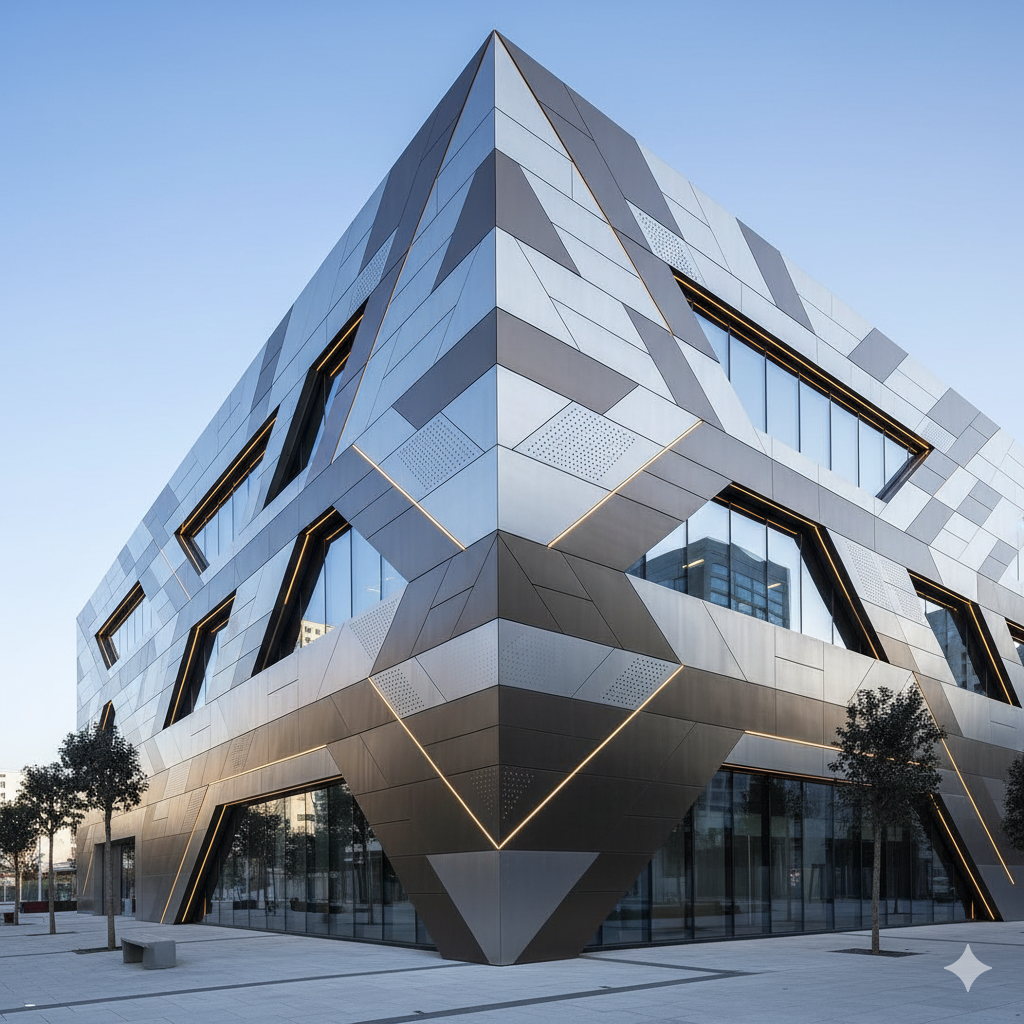
Aluminum composite material (ACM) gives you a lightweight, rigid panel made from two thin aluminum sheets bonded to a non-aluminum core, delivering a durable and flat surface ideal for cladding, signage, and architectural accents. You can expect a balance of strength, visual versatility, and ease of installation that makes ACM a practical choice across construction, signage, and design projects.
This article breaks down how ACM is made, what properties make it useful, and where it performs best—so you can judge suitability for your next project. Expect clear comparisons of core types, performance trade-offs, and common uses so you can choose the right panel for performance and code requirements.
Understanding Aluminum Composite Material
Aluminum composite material combines thin aluminum skins with a central non-aluminum core to deliver strength, lightweight performance, and surface finish options. You’ll find choices that trade weight for fire resistance, rigidity, or cost depending on application needs.
Composition and Structure
ACM typically consists of two aluminum sheets, each 0.2–0.5 mm thick, bonded to a core layer that ranges from 2 mm to 6 mm in thickness. The faces are usually alloyed aluminum (e.g., 3000 or 5000 series) offering corrosion resistance and formability.
You can select different surface coatings—PVDF or polyester—depending on UV resistance and color durability requirements. These coatings affect appearance, weathering, and maintenance cycles.
The core material determines many physical behaviors. Common cores include polyethylene (PE) for low cost, mineral-filled or fire-retardant cores for safety, and honeycomb or foam cores for high stiffness-to-weight ratios. Bonding uses thermoplastic adhesives or continuous roll lamination to create a sandwich panel that behaves as a single structural element.
Core Properties and Performance
Core choice controls fire performance, bending stiffness, and acoustic damping. PE cores offer low weight and good formability but fail to meet many fire codes; fire-resistant mineral cores significantly raise flame spread ratings and smoke production limits.
Honeycomb and foam cores increase panel rigidity without proportionally increasing weight, improving wind-load performance and long-span applications.
Thermal expansion (approximately 23–24 µm/m·°C for aluminum) and thermal conductivity matter for façade design and insulation planning. You should account for edge sealing, fastener spacing, and thermal breaks to control moisture ingress and thermal movement. Impact resistance depends on face thickness and core density; thicker faces reduce denting in high-traffic or mechanical-contact areas.
Common Grades and Variants
You’ll encounter several standardized product types:
- PE-core ACM: economical, widely used for signage and interior cladding.
- Fire-resistant (FR) ACM: mineral or modified cores meeting EN, ASTM, or local fire codes for exterior façades.
- Honeycomb-backed ACM: high stiffness for large-format panels and rainscreen systems.
Faces vary by alloy and coating: 3000-series for formability and cost balance; 5000-series for improved corrosion resistance and strength. Finishes include smooth, brushed, woodgrain, and high-gloss PVDF.
When specifying, confirm test certificates for fire performance, peel strength, and flatness, and match panel thickness, core type, and finish to your structural, regulatory, and aesthetic requirements.
Applications and Benefits in Modern Industries
Aluminum composite material (ACM) delivers high strength-to-weight performance, weather and fire-resistant options, and a smooth finish that supports vivid graphics. You can expect ease of fabrication, long service life, and variants designed for recycling or enhanced safety.
Architectural and Construction Uses
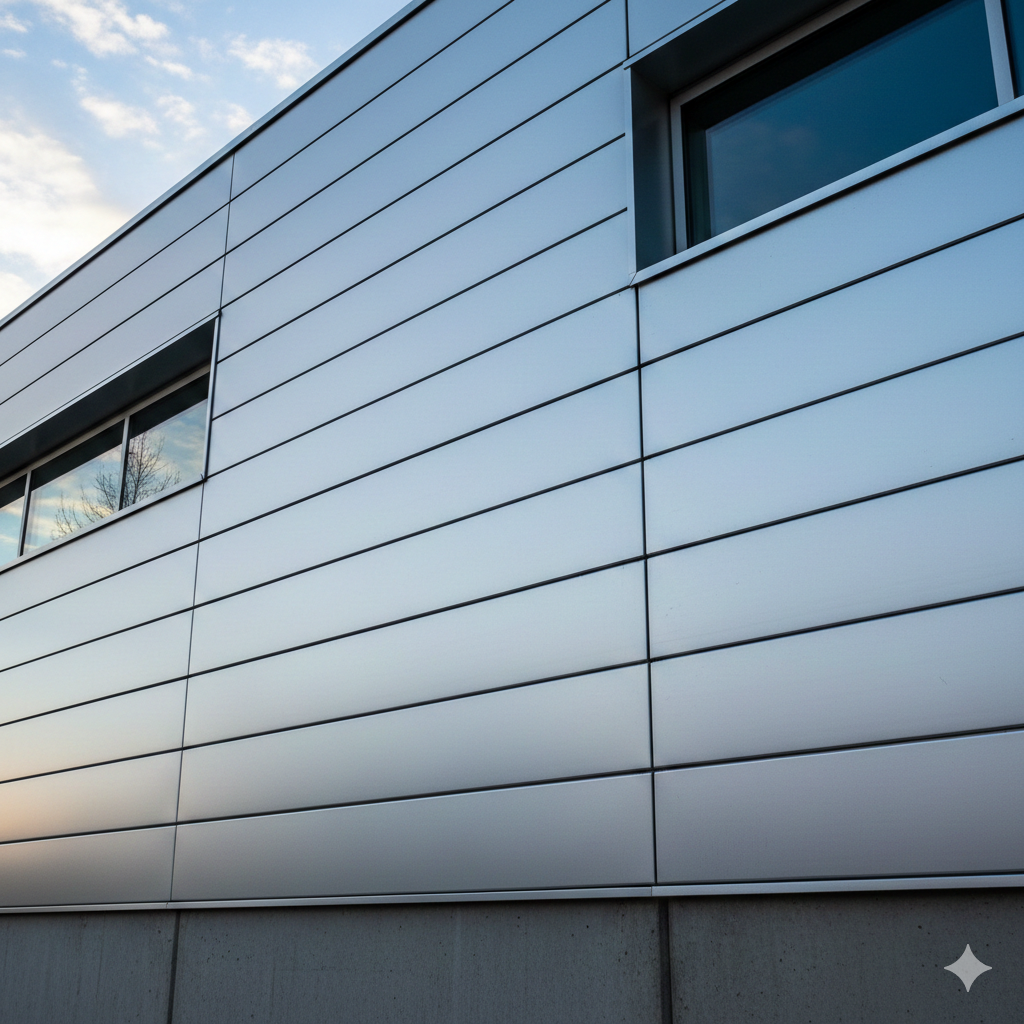
You can use ACM for exterior cladding, curtain walls, and soffits because it combines a rigid core with aluminum skins for dimensional stability. Its lightweight nature reduces load on supporting structures and simplifies installation, which cuts labor time and foundation requirements on mid-rise and high-rise projects.
ACM panels resist corrosion and can include fire-retardant cores to meet local building codes; specify core type early in design to satisfy code and insurance requirements. The material’s flat, paint-ready surface enables long-lasting color retention and low maintenance, letting you achieve consistent façades and complex shapes with routed edges or folded profiles.
Signage and Display Solutions
You can apply ACM for retail signs, wayfinding, and exhibition graphics due to its smooth face and print-friendly surface. Digital and screen printing produce vivid, high-resolution images that endure outdoor UV exposure better than many painted substrates.
Cutting, bending, and finishing remain straightforward, so you can deliver custom sizes and lightweight installations that lower hanging hardware costs. For indoor kiosks and point-of-sale displays, ACM offers a clean look and durability against bumps and cleaning agents, extending the life of branded assets.
Industrial and Transportation Applications
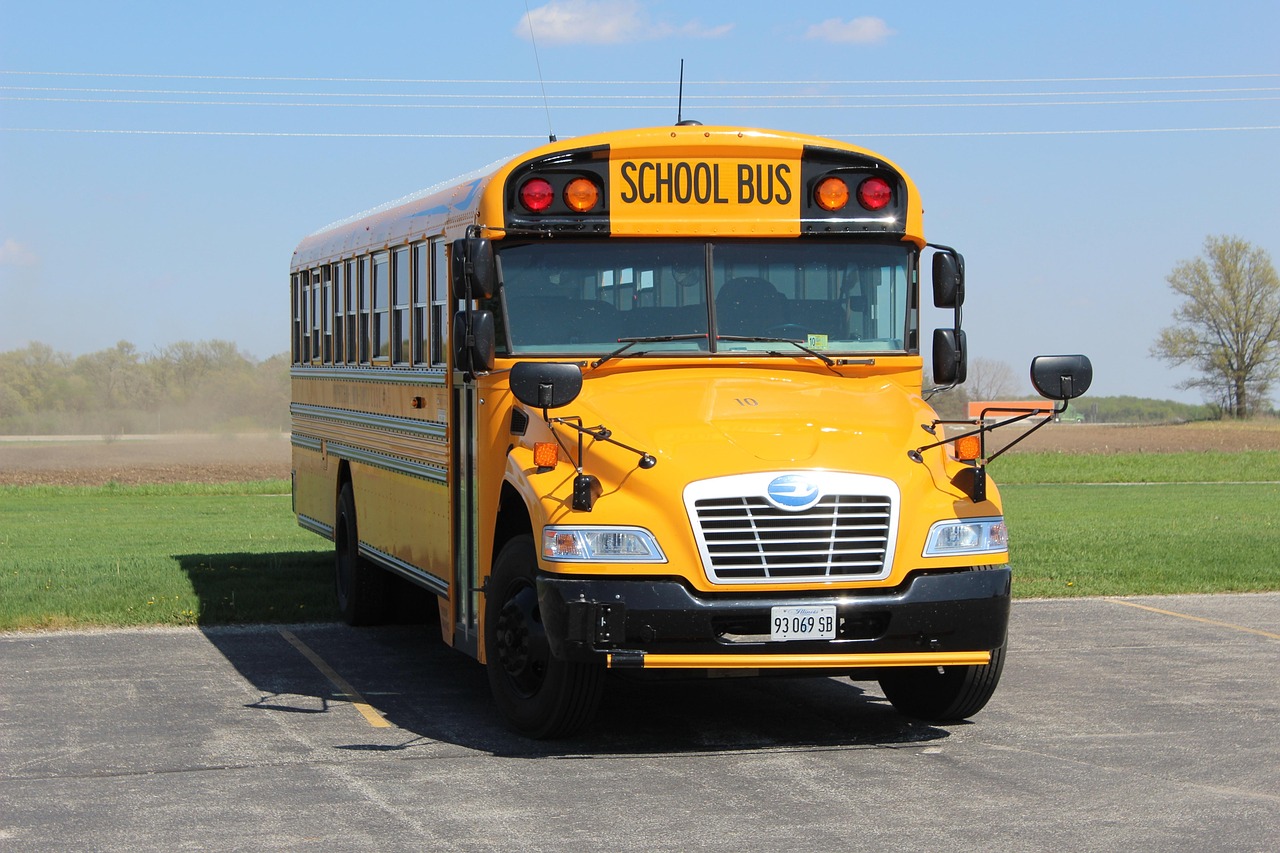
You can employ ACM in vehicle bodies, trailer panels, and rail interiors where weight reduction improves fuel efficiency and payload capacity. Its combination of stiffness and lightness suits secondary structures and non-structural skins that must resist weather and road debris.
In industrial settings, ACM serves as protective cladding for equipment housings and control-panel enclosures because it resists corrosion and accepts tamper-resistant fastenings. Choose appropriate core materials and surface treatments when fire performance, chemical exposure, or EMI shielding are design drivers.


Leave a Reply