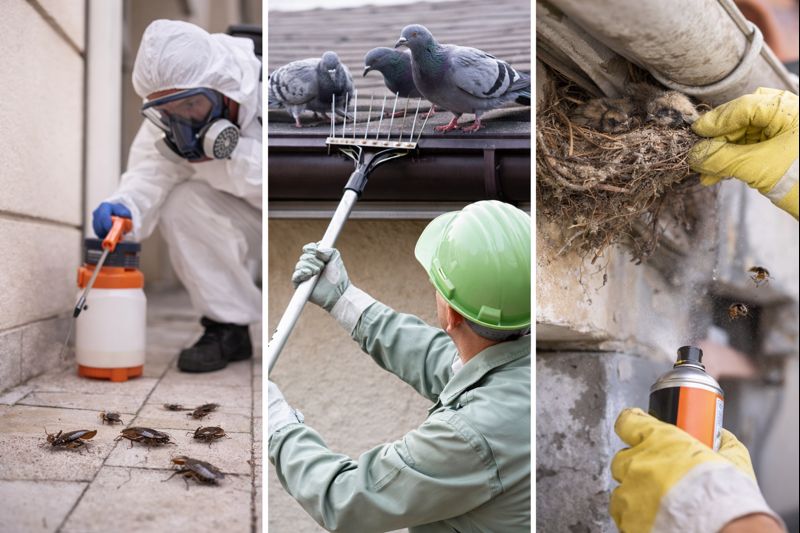
Birds can damage property, create health hazards, and make outdoor spaces unusable if you don’t act decisively. A professional bird control service assesses your site, recommends humane, eco-friendly deterrents like netting, spikes, or exclusion work, and implements a tailored plan to keep birds away long term.
You’ll learn how services diagnose problems, which methods suit different situations, and what to expect during installation and follow-up so you can choose the right solution for your home or business. This article helps you spot common problem species, compare proven control options, and decide when professional help will save time and protect your property.
Bird Control Service Overview
You will learn what bird control means in practice, which problems prompt action, and which industries commonly need ongoing solutions. The following sections focus on concrete methods, typical damages and risks, and where you’re most likely to hire professionals.
What Is Bird Control
Bird control uses targeted, humane methods to prevent birds from roosting, nesting, or causing damage on your property. Providers perform a site assessment, recommend exclusion (netting, spikes, screens), deterrence (visual, auditory, trained raptors), and population management when necessary.
Technicians base choices on species, building layout, and local regulations. For example, pigeon issues often call for spikes or ledge netting, while large gull or starling problems may require falconry or loud deterrents.
You should expect integrated plans that combine short-term deterrents with longer-term exclusion and maintenance. Successful programs document exposure points, install physical barriers, and schedule follow-up inspections to verify effectiveness.
Common Bird Problems
Birds create several measurable problems that justify professional intervention: droppings that corrode metals and create slip hazards, nesting in vents and gutters that block drainage or pose fire risks, and noise that disturbs occupants.
You also face health concerns from airborne dust and pathogens in accumulated droppings, plus contamination of food-handling or manufacturing areas. Property managers often report reputational damage from visible bird waste on façades, vehicles, and outdoor seating.
Technical responses match the problem: droppings and sanitation require cleaning and deterrents; entry points need exclusion; active nests near vents may require timed removal under permit. Ask providers for documentation of permits and sanitation protocols.
Industries Served
You will find bird control commonly used in these sectors:
- Commercial buildings: rooftop units, ledges, loading docks.
- Food processing and restaurants: contamination risk in storage, delivery areas.
- Airports: bird strikes create safety and regulatory concerns.
- Agriculture: crop damage and feed contamination from pigeons, starlings.
- Warehousing and distribution: pallets and open bays attract roosting.
- Healthcare and education facilities: infection control and aesthetics.
Different industries demand specific approaches. For example, airports require avian hazard management plans and trained wildlife officers; food facilities need documented exclusion and sanitation measures that meet regulatory audits.
When selecting a service, verify industry-specific experience, evidence of humane methods, and proof of insurance and permits for any removal or relocation work.
Effective Bird Control Methods
You’ll find practical, site-specific methods that stop birds from roosting, nesting, and damaging surfaces. These methods emphasize physical barriers, targeted exclusions, and habitat changes you can implement or hire professionals to install.
Physical Deterrents
Use visible and tactile tools that make landing and perching uncomfortable or risky for birds. Common choices include stainless-steel bird spikes for narrow ledges, angled perch systems for railings, and sloped covers for signage. Install spikes on window sills, parapets, and HVAC units where birds routinely stand.
Visual and auditory deterrents add short-term disruption. Reflective tape, predator silhouettes, and ultrasonic devices can reduce visits when rotated regularly to prevent habituation. Falconry teams provide active deterrence for large open areas like airports and stadiums; they require scheduling but are effective without permanent fixtures.
Maintain and inspect deterrents seasonally. Replace bent spikes, re-tension wires, and reposition visual devices as birds adapt. Proper mounting and corrosion-resistant materials extend life and keep your investment effective.
Exclusion Techniques
Exclusion stops birds from entering or using specific spaces by sealing access points and installing barriers. Netting and mesh are the primary tools: heavy-duty nylon or stainless-steel mesh over eaves, courtyards, and vents prevents nesting while allowing airflow. Use bird wire or tensioned cable systems along long ledges to prevent landing across extended runs.
Door and vent screening keeps small birds out of attics and ducts. Fit vents with one-way doors or removable panels for seasonal cleaning. For industrial sites, rooftop hatch covers and sky-light guards prevent infestation in maintenance areas.
Plan exclusion to preserve access for maintenance and comply with wildlife rules. Work around existing utilities, and use hinged net frames or quick-release fasteners where frequent access is required.
Habitat Modification
Change the environment to make it unattractive for feeding, nesting, and sheltering. Remove or relocate food sources: secure trash bins, cover compost, and restrict intentional feeding of pigeons or gulls. Trim trees and prune dense shrubs close to buildings to eliminate sheltered nesting sites.
Alter water availability and perching opportunities. Repair leaks, drain standing water, and remove decorative ponds near building eaves if they attract birds. Replace broad, flat surfaces with angled or textured finishes during repairs to discourage landing.
Evaluate landscaping and building design together. Swap fruiting trees near rooflines for species that produce less fruit, and specify bird-resistant materials for renovation projects. Monitor results and adjust plantings or maintenance practices seasonally to sustain reduced bird presence.

Leave a Reply