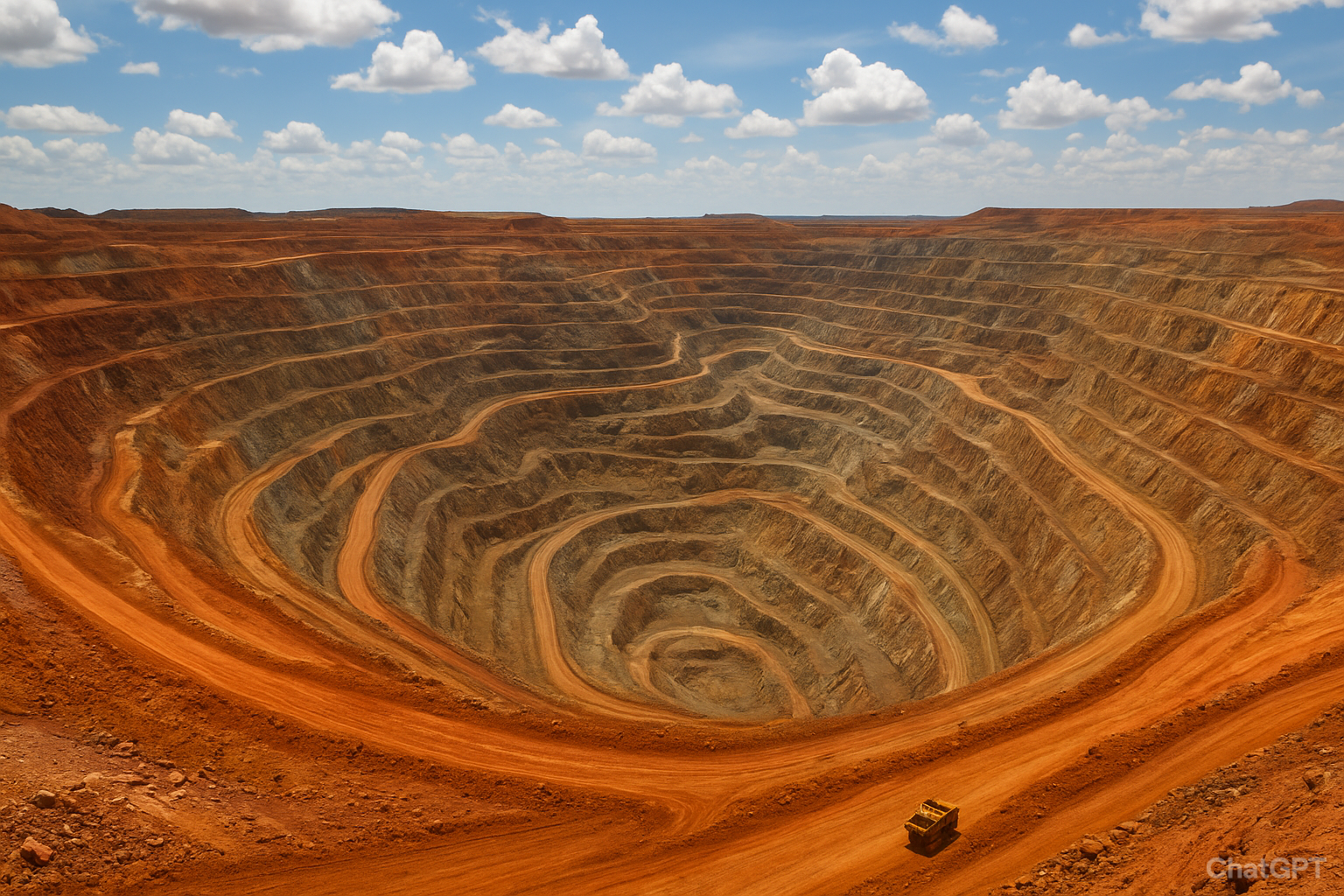
You rely on copper every day—inside your phone, behind your walls, and in the renewable-energy systems powering the future—so understanding how it’s mined matters. Copper mining extracts and refines ore through open-pit and underground methods, then processes it into metal that powers electrical grids, EVs, and construction, making it central to modern infrastructure and the energy transition.
This article walks you through the practical steps of copper mining, from exploration and extraction to smelting and recycling, while weighing the economic benefits against environmental and community impacts. Expect clear explanations of techniques, real-world consequences, and what mining innovations mean for supply, jobs, and sustainability.
Copper Mining Processes
You will find steps that take ore from discovery through removal and into market-ready copper. Key activities include targeted exploration, choosing between open-pit or underground extraction, and separating copper minerals before smelting or leaching.
Exploration and Discovery
You begin with geological mapping, airborne geophysics, and soil or rock sampling to locate anomalous copper signatures. Drill cores provide the continuous data you need to estimate grade, thickness, and depth; these inform a resource model and a preliminary economic assessment.
You then run metallurgical tests on representative core to determine whether the deposit contains oxide, sulfide, or mixed ores. That choice dictates downstream processing and cost assumptions. Environmental baseline studies and community engagement start early to identify permitting, water, and land-use constraints.
A completed exploration phase yields a defined resource, a mine plan option (open pit or underground), and the data required for feasibility studies and permitting.
Extraction Techniques
You choose extraction method based on ore depth, geometry, and rock stability. For shallow, bulk deposits you will usually use open-pit mining with drill-and-blast, haul trucks, and shovels to move large volumes of ore and waste.
For deeper or higher-grade zones you will adopt underground methods such as block caving, sub-level stoping, or cut-and-fill. Those methods reduce surface disturbance but increase ventilation, ground-support, and safety requirements.
You must also plan waste-rock placement, water management, and slope stability monitoring. Equipment selection, cycle times, and fuel use directly affect operating cost and carbon intensity, so you optimize fleet productivity and payloads.
Ore Processing and Refining
You first crush and grind ore to liberate copper minerals. For sulfide ores, flotation concentrates copper minerals into a sulfide concentrate typically containing 20–30% Cu; for oxide ores, you use heap leaching with sulfuric acid to produce a copper-rich solution.
If flotation is used, you thicken and filter the concentrate before shipping to a smelter; smelting and converting produce blister copper (~98–99% Cu) which then undergoes electrorefining to cathode-grade 99.99% Cu. If hydrometallurgy is used, you perform solvent extraction and electrowinning (SX-EW) to produce cathodes directly from leach solution.
You must control tailings chemistry, reagent consumption, and water recycling. Metallurgical test work determines recoveries, reagent regimes, and the size of downstream facilities, which in turn define project economics and environmental footprint.
Economic and Environmental Impact
This section explains how copper markets shape national revenues and how mining affects land, water, and communities. It also outlines practical steps you can take or expect regarding recycling and industry sustainability.
Global Copper Supply and Demand
You rely on copper for electrical wiring, motors, renewable-energy infrastructure, and electronics, so global demand tracks industrial growth and energy transitions. Chile supplies roughly a quarter of global mined copper; other major producers include Peru, China, the U.S., and Zambia, which together influence prices and investment decisions.
Prices respond to mine output, inventory levels, and infrastructure projects such as grid expansion and electric-vehicle manufacturing. Exploration success, ore grade declines, and geopolitical risks affect future supply and can push companies to invest in brownfield expansions or new, higher-cost projects.
For governments and investors, royalties, taxes, and export revenues from large mines can represent significant portions of GDP in producing regions. You should expect cyclical revenue streams tied to commodity cycles, with fiscal policy and local content rules shaping how benefits are distributed.
Environmental Considerations
Copper extraction alters landscapes through open pits, waste rock, and tailings; you should expect permanent landform changes at most large mine sites. Acid rock drainage and heavy-metal leaching can contaminate surface and groundwater if tailings and waste rock are not properly managed.
Smelting and concentrating release sulfur dioxide and particulate matter, which require emissions controls to protect air quality. Water use is another critical constraint—mining often competes with local agriculture and communities, especially in arid regions like northern Chile.
Social impacts include displacement, changes in livelihoods, and pressure on local services. You can assess project risk by reviewing environmental impact assessments, tailings-management plans, and community engagement records before supporting or permitting a mine.
Recycling and Sustainability
Recycling secondary copper reduces the need for new ore and cuts energy use—recycled copper uses up to 85% less energy than primary production. You can increase supply resilience by improving collection systems, urban mining from electronics, and industrial scrap recovery.
Sustainability practices in mines include water reuse, dry-stack tailings, progressive reclamation, and low-emissions smelting technologies. Investors and regulators now expect measurable targets: reductions in water consumption per tonne of copper, closure funding set aside, and independent tailings audits.
Key levers you can influence are policy incentives for recycling, stricter permitting on tailings and water, and procurement standards that favor material traceability and lower-carbon copper sources.




Leave a Reply